All About TECH, CODE,ROBOT, IOT AND FUN.
This site is all about latest technology trends, news, smartphones and geeky 'how to do things' tutorials and internet of things.
With the same high-performing cooler, the HIS 6870 IceQ X Turbo X should be remarkably similar to the HIS 6950 IceQ X Turbo X reviewed previously. The mid-range 6870 should run cool and quiet while sporting hefty overclocks like the high-end cards. Lets see if that holds true as we torture the HIS 6870 with some intense overclocking and benchmarks.
Product Specifications and Features
The 6870 has been released for quite some time now, so it is not necessary to explain the the technical details and features. You can see that HIS 6870 IceQ X Turbo X sports very aggressive factory overclocks on coming in at a blazing 975Mhz core with the memory at 1150Mhz out of the box. That is impressive from the reference clocks of 900Mhz/1050Mhz.
Technical Features
The 6870 comes with similar features as its bigger brothers do. Below is a list from the HIS website of the major features of this card.
Cooling
In order to fulfill its promises of a -15° C cooler temperatures and 15db quieter operation, HIS has placed the latest IceQ cooler on the 6870. The heatsink has a nice ice blue cover helping route the airflow and give it that ‘IceQ’ look. The newest version of this cooler uses four aluminum heat pipes along with aluminum fins and a 92mm fan blowing down on to the heatsink. Air flow then exhausts partially out the back of a case, through the top and rear. Below you can see a picture of the cooling system broken down in to its parts showing how it works:
With this cooler and the automatic fan profile, the card never broke 60° C with a 23° C ambient. The fan ramped up to around the 65% mark, so it fairly quiet throughout the benchmarking and gaming sessions. Definitely audible, but quiet. When I cranked up the fan to 100% and tested that way, the card never broke 55° C even when overclocked with added voltage. Pretty impressive feat.
Overall this is one of the quietest and most effective coolers on a GPU I have seen in a while, especially when compared to the reference coolers. The auto profile in Afterburner kept the card cool and quiet throughout its active life with me which was nice to finally not have to adjust it manually. HIS has a great cooler for the IceQ series of cards… effective, and quiet.
As you can see we achieved some decent results when overclocking this card to the max. It wasn’t as big of an increase as the other cards in this series, however this card started out at 975Mhz in the first place. I was able to achieve 1021Mhz core and 1200Mhz memory to pass most tests with the voltage set on the Afterburner maximum of 1.3v. On Vantage I had to drop the core back to 1000Mhz. I kept the fan cranked at 100% for these tests and the card peaked around 55° C. Not much of a difference vs stock speeds! I was a bit disappointed in the lack of headroom for overclocking, but after researching a bit hwbot.org, it seems as though the clocks I achieved are about normal and my expectations were just out of line. It just goes to show how aggressive the factory overclocks are on this card.
Headphones are a gadget that people often fail to fully appreciate.
In the face of all the latest tech trends, headphones remain just as versatile as ever. They’re virtual reality devices letting users experience concerts in their homes, they’re the first wearables to reach ubiquity and, if you believe the folks at Doppler Labs, they’re about to find a new role in shaping consumer attitudes toward the future of augmented reality.
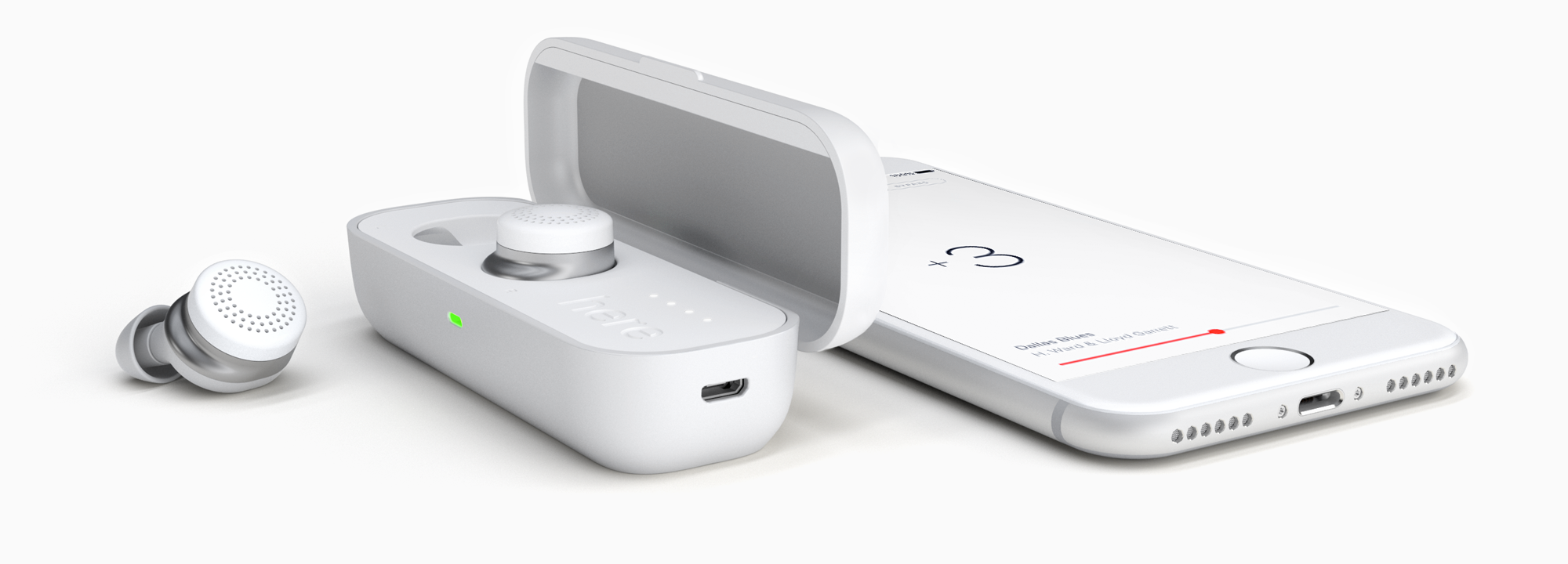
The $299 Here One headphones are about far more than listening to tunes, they’re about hearing different aspects of life unfold at the volume you desire. They’re also about buying into the future a tad bit earlier than everyone else and getting to experience something truly unique.
Following delays that left the device out of buyers’ hands over the holidays, Doppler Labs is finally beginning to ship out pre-orders. I’ve had a few weeks to play around with the smart earbuds, giving me time to test all their features and home in on what fits into my daily life.
Hands down, Here One sounds the best out of all the truly wireless earbuds I’ve tested. Music is more clear and dynamic than on the Bragi Headphone, which I felt was the the best-sounding pair of truly wireless earbuds until now. Here One also makes AirPods sound pedestrian, but this is also thanks to the way the earbuds create a full seal in your ear (there is a variety of rubber and foam tips included in the packaging, too). Doppler Labs is quick to boast about how many software engineers it has on staff, in part because they’re not all dedicated to the augmented reality side of things. These people know their music, and it shows.
Listening to music on Here One is like fanning out a deck of cards. You’ll discover there’s more to songs you thought you knew well. It’s not an enormous difference, like the kind you’d discover if you were listening to music through an amp or on a device with a DAC, but it’s an appreciable one.
HERE ONE earbuds
The horn parts I’m always humming along to on Dr. John’s album Locked Down haven’t changed, and yet on Here One it sounds like the instruments occupy different spaces around me, which adds to the complexity of the music. With Here One I was able to make out the wetness of Childish Gambino’s mouth (sorry) as he sings in "Zombies," a detail I had never noticed in dozens of previous listens. The earbuds also do a good job of handling high-frequency sound, too: I heard cymbal hits and high hat taps I had never noticed in the punk rock of PUP, and that music is usually muddy as hell on Bluetooth earbuds.
Something I also appreciate about Here One is that the hardware and software experience is simple and slick. With a quick tap to either earbud, for instance, you can pause that music and let in the sound around you. This is called "bypass" in the Here One app — which is fantastic, by the way — because it interrupts any music or audio filters that are working in order let in a baseline audio mix.
The bypass mode is super helpful when someone starts talking to you, but also if you just generally want to pull yourself out of your music for a moment and don’t want to pluck out (and risk dropping) the earbuds. It takes a minute to work up the muscle memory of striking the touch-sensitive part in the center of the earbuds, but once you do it becomes a simple and integral part of the experience.
The Here Ones are all about listening. You listen to them, but more impressively, they listen to everything happening around you. Each of the earbuds packs three MEMS microphones, which process the sound around the user and deliver it to their ear canals with zero latency. Using this feature (Doppler Labs calls it Active Listening), users can adjust the noises they’re hearing in the world around them, boosting voices or toning down the party.
Active Listening is broken up into a couple of flavors inside the device’s iOS app: Noise Filters, which are presets optimized for audio levels at the office or in a restaurant, and Live Mix, which lets you take control in altering the highs and lows of whatever sound environment you’re in. With either you can shift the loudness of each filter, either draining the noise 22 decibels or enhancing it by 5 decibels.
I was a frequent user of the “Office” noise filter. It drained out a lot of the light chatter around me but allowed more prominent voices to come through in full force. More often than not, however, I was just using the earbuds to keep the noise as low as possible, especially when walking around outside where the wind often heavily distorted what I was hearing with mic crackles galore.
Live Mix feels quite a bit more gimmicky when it comes to actual everyday use. While the tab was often the first one I opened when showing the Here Ones to people for the first time, there just isn’t much utility beyond the “wow” factor of your first demo with it.
The biggest problem with the Here Ones is the friction required to use any of its “Active Listening” features through the iOS app. I honestly can’t think of much Doppler Labs could have done better here— the app is intuitive and well-designed— but having to use an app to trigger the noise filters is ultimately so damaging to the Here Ones’ utility. After using these headphones for a couple of weeks, the use cases of “active listening” features have become far less dynamic and I generally just toss the buds in, lower the volume to its strongest level of voice-cancelling and go to town.
For much of this millennium, we’ve had to deal with the eye sore of Bluetooth headsets with their elongated mics and chunky form factors.
While Apple got quite a bit of shit from the internet for the design of the AirPods, the wireless earbuds we are seeing emerge are by-and-large much better-looking than their ancestors. The Here Ones aren’t the tiniest wireless earbuds out there (20.1mm in height), but for their size, they are pretty stylish compared to others. Audio quality is quite good, as it admittedly should be for a $299 pair of earbuds.
Much like the AirPods, the Here Ones are a bit careful when it comes to offering a full gamut of onboard controls. Using capacitative touch, you can tap one of the headphones to go into passthrough mode, where your music is paused and you hear the world at (roughly) normal volumes. Additionally, with a double tap, you can summon Siri and dismiss her. While I can understand companies not wanting users to be stuck hitting the sides of their head to get a product functioning, I do wish Doppler had given the Here Ones a chance to be more customizable in terms of available controls.
One issue with the design is comfort. In order to cancel out a good deal of noise and allow the Here Ones to work at their best, the seal between the earbud and ear has to be pretty tight, something that was hard to get used to in terms of comfort. The Here Ones come with six sets of small, medium and large tips in both rubber and foam to help you find the best fit. Getting the right fit was a challenging task; I settled on the medium foam tips which I had to roll up a bit before placing in my ears and allowing them to expand.
Ultimately, the uncomfortable fit needed to make the most of the Here Ones is probably what left me reaching for my AirPods in most situations.
The other thing that left me reaching for my AirPods was the fact that my Here Ones were often dead. Battery life is probably the most notable disappointment of the Here Ones. They didn’t scrape past two hours for combined music/ active listening usage. This was a real bummer, and although the case adds another three full charges, it was annoying that I needed to take an hour-long charging break when I was rocking these during a flight, which is a pretty prime use case for these.
There’s a lot more happening here than on the average pair of headphones so the battery taking a hit is understandable but Doppler Labs initially was promising battery life of about double what it ended up shipping with.
The wearable market has been embodied by products like smart watches that offer limited functionality improvements to the smartphones they are connected to, but are ultimately not giving users a markedly evolved user experience. With the Here Ones, the world of Black Mirror and Her seems closer than ever.
I’ve always been particularly excited by the future that smart wireless earbuds offer. Having a device in your ear that can effortlessly take voice input and give auditory feedback is truly going to shift how people engage with computers and the world. Augmented reality doesn’t need a visual headset like HoloLens to revolutionize interactions, earbuds and audio interfaces could very well be the place we see the next bouts of consumer attention, especially as digital assistants like Siri and Alexa see their skills improve.
Regardless of what the company claims, the Here One is a device with an always-on future embedded in its philosophy. The device’s short battery life curtails these early dreams, but the ideas surrounding active listening and some of the more experimental efforts the company is currently engaged with paint the picture of a future where we can hear the future we want to. Though most wireless earbuds currently mimic the headphones we’ve had for decades, I would be surprised not to see the technology Doppler Labs has built for the Here Ones to be found in the next generation of wireless ‘buds.
These headphones are a taste of a near-term future that is full of exciting possibility. Augmented reality isn’t just about Magic Leap, it’s about being able to customize what the future sounds like to you.
IP (or "Ingress Protection") ratings are defined in international standard EN 60529 (British BS EN 60529:1992, European IEC 60509:1989). They are used to define levels of sealing effectiveness of electrical enclosures against intrusion from foreign bodies (tools, dirt etc) and moisture.
What do the numbers in an IP Rating mean?
The numbers that follow IP each have a specific meaning. The first indicates the degree of protection (of people) from moving parts, as well as the protection of enclosed equipment from foreign bodies. The second defines the protection level that the enclosure enjoys from various forms of moisture (drips, sprays, submersion etc). The tables below should help make sense of it:
X-U camera this amazing shooter has amazed us aplenty with a promise of being rustproof, shockproof when dropped from four feet and of course, the 49-feet waterproof ability.
The camera has a 3-inch 920k-dot LCD display that you can review and preview your shots on. You will enjoy shots captured at 5 fps thanks to a maximum ISO of 12,500 and 1080p HD footage at 30 fps.
You will find the manual shutter speed and aperture control dials atop the camera and placed above the lens is an integrated flash.
The camera sports a 16.2-megapixel APS-C CMOS sensor with the hallmark Summilux 23 mm f/1.7 lens In the front of the camera.
The rubberized exterior does well to absorb shocks and also serves as a fantastic grip.
Not only that is a great to use camera but also a handsome camera to have one.
Before you leave, do me a favor and answer me this question:
What’s your opinion of Bitcoin?
~Is it here to stay — permanently — or is it just another passing fad?
Leave your comment below (Please! Don’t forget to use the social sharing buttons, either)!
The XZ , a phone that comes too late in the year. T machine is powered by a Snapdragon 820 processor with 3GB of RAM and 32GB of expandable storage,Sony’s Xperia XZ triples down on camera technology with a new laser autofocus, RGBC-IR white balance sensor, and its traditionally strong 23-megapixel imaging sensor. 5.2-inch phone up to the same level as Samsung’s Galaxy S7 and S7 Edge, which already lead the Android pack. If your in US you can buy the new Xperia XZ for an unsubsidized price of $699.99 this october.
NETWORK
Technology
GSM / HSPA / LTE
PLATFORM
OS
Android OS, v6.0.1 (Marshmallow), planned upgrade to v7.0 (Nougat)
Chipset
Qualcomm MSM8996 Snapdragon 820
CPU
Quad-core (2x2.15 GHz Kryo & 2x1.6 GHz Kryo)
GPU
Adreno 530
CAMERA
Primary
23 MP, f/2.0, 24mm, phase detection and laser autofocus, LED flash
Features
1/2.3" sensor size, geo-tagging, touch focus, face detection, HDR, panorama
Video
2160p@30fps, 1080p@30fps, 1080p@60fps
Secondary
13 MP, f/2.0, 22mm, 1/3" sensor size, 1080p, HDR
MEMORY
Card slot
microSD, up to 256 GB (dedicated slot)
Internal
32/64 GB, 3 GB RAM
FEATURES
Sensors
Fingerprint, accelerometer, gyro, proximity, barometer, compass, color spectrum
Everyone are looking for modern ways to track their vehicles. The new Zubie device with
Best all-around mobile application, Strong Wi-Fi connection through Verizon, Business features and plan available aims to meet the needs of both applications with a device to send your vehicle’s information from the ODBII port right to your smartphone or computer.
The Zubie can send you an automated update on your car's location and keep track of maintenance.
Zubie was created with partial funding from Best Buy back in 2012.
The device has been one of the earlier pioneers in the connected car industry and have expanded to the newest Wi-Fi model. The Zubie basic unit without Wi-Fi is technically free but you will pay $100 which includes the first year of service and service going forward will continue at $100/year.
The Wi-Fi model Service cost will you a bit more at $10 per month or $120 per year.
In either case there are no contracts, a 30 day money back guarantee, and one year warranty.
Because of the partnership with Verizon, the Zubie Wi-Fi can act as a hotspot but you will need to connect it to the Verizon network with an existing plan or start a new Verizon plan. The partnership made Zubie to have a more consistent Wi-Fi connection and higher speeds than any order the competing devices using T-Mobile or Sprint.
Driving connected, Once the zubie is received you can sync your Zubie with an account on zubie site,
or within the Zubie mobile application for iOS and Android.
The Zubie application will give the location of vehicles within the group making important information readily available.
Once a vehicle card on the main screen is selected the current fuel level, self test results, battery status, and any maintenance alerts. Scrolling down further, will sow a map and information such as distance, time length, driving habits, and fuel cost of your latest trip.
Before you leave, do me a favor and answer me this question:
What’s your opinion of Bitcoin?
~Is it here to stay — permanently — or is it just another passing fad?
Leave your comment below (Please! Don’t forget to use the social sharing buttons, either)!


/cdn0.vox-cdn.com/uploads/chorus_asset/file/8015567/akrales_170217_1464_A_0172.0.jpg)


/cdn0.vox-cdn.com/uploads/chorus_asset/file/7029149/VLS_9210.0.jpg)
/cdn0.vox-cdn.com/uploads/chorus_asset/file/7029151/VLS_9213.0.jpg)

