Wednesday, 22 February 2017

HERE ONE earbuds

HERE ONE earbuds

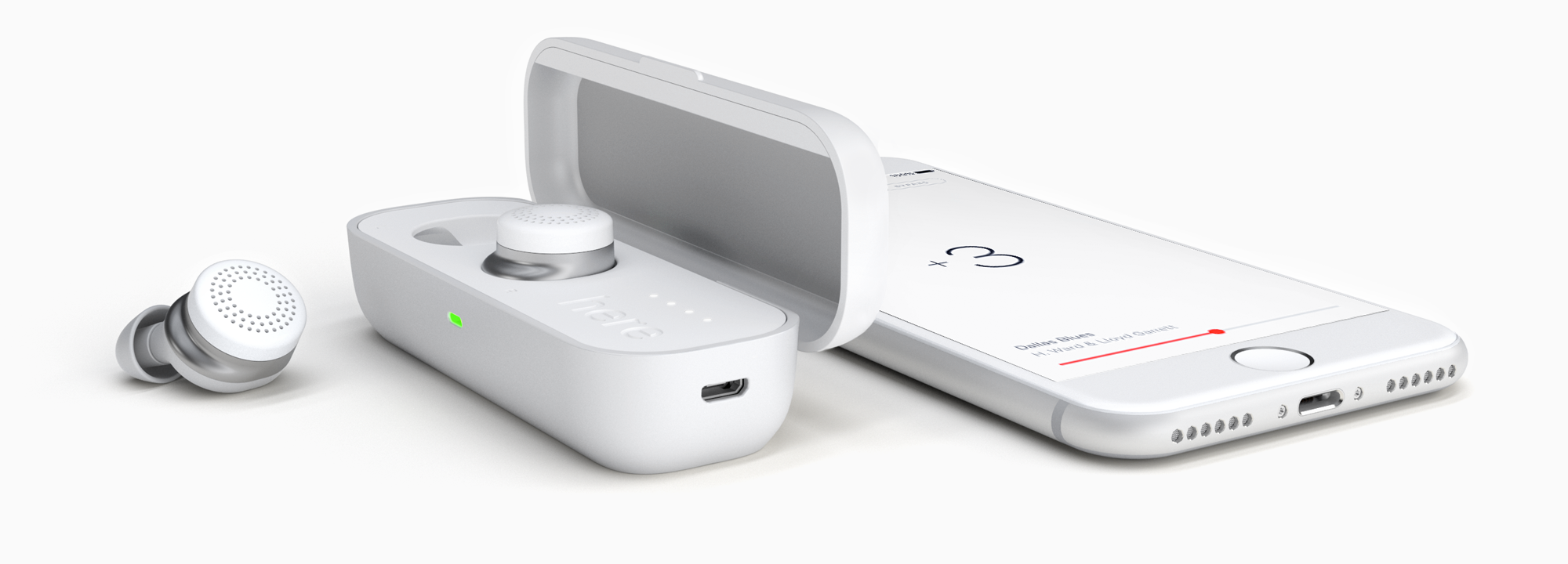
Here One earbuds and case in white

HERE ONE earbuds
Headphones are a gadget that people often fail to fully appreciate.
In the face of all the latest tech trends, headphones remain just as versatile as ever. They’re virtual reality devices letting users experience concerts in their homes, they’re the first wearables to reach ubiquity and, if you believe the folks at Doppler Labs, they’re about to find a new role in shaping consumer attitudes toward the future of augmented reality.
The $299 Here One headphones are about far more than listening to tunes, they’re about hearing different aspects of life unfold at the volume you desire. They’re also about buying into the future a tad bit earlier than everyone else and getting to experience something truly unique.
Following delays that left the device out of buyers’ hands over the holidays, Doppler Labs is finally beginning to ship out pre-orders. I’ve had a few weeks to play around with the smart earbuds, giving me time to test all their features and home in on what fits into my daily life.


Hands down, Here One sounds the best out of all the truly wireless earbuds I’ve tested. Music is more clear and dynamic than on the Bragi Headphone, which I felt was the the best-sounding pair of truly wireless earbuds until now. Here One also makes AirPods sound pedestrian, but this is also thanks to the way the earbuds create a full seal in your ear (there is a variety of rubber and foam tips included in the packaging, too). Doppler Labs is quick to boast about how many software engineers it has on staff, in part because they’re not all dedicated to the augmented reality side of things. These people know their music, and it shows.

Listening to music on Here One is like fanning out a deck of cards. You’ll discover there’s more to songs you thought you knew well. It’s not an enormous difference, like the kind you’d discover if you were listening to music through an amp or on a device with a DAC, but it’s an appreciable one.
HERE ONE earbuds


The horn parts I’m always humming along to on Dr. John’s album Locked Down haven’t changed, and yet on Here One it sounds like the instruments occupy different spaces around me, which adds to the complexity of the music. With Here One I was able to make out the wetness of Childish Gambino’s mouth (sorry) as he sings in "Zombies," a detail I had never noticed in dozens of previous listens. The earbuds also do a good job of handling high-frequency sound, too: I heard cymbal hits and high hat taps I had never noticed in the punk rock of PUP, and that music is usually muddy as hell on Bluetooth earbuds.
Something I also appreciate about Here One is that the hardware and software experience is simple and slick. With a quick tap to either earbud, for instance, you can pause that music and let in the sound around you. This is called "bypass" in the Here One app — which is fantastic, by the way — because it interrupts any music or audio filters that are working in order let in a baseline audio mix.
The bypass mode is super helpful when someone starts talking to you, but also if you just generally want to pull yourself out of your music for a moment and don’t want to pluck out (and risk dropping) the earbuds. It takes a minute to work up the muscle memory of striking the touch-sensitive part in the center of the earbuds, but once you do it becomes a simple and integral part of the experience.
The Here Ones are all about listening. You listen to them, but more impressively, they listen to everything happening around you. Each of the earbuds packs three MEMS microphones, which process the sound around the user and deliver it to their ear canals with zero latency. Using this feature (Doppler Labs calls it Active Listening), users can adjust the noises they’re hearing in the world around them, boosting voices or toning down the party.
Active Listening is broken up into a couple of flavors inside the device’s iOS app: Noise Filters, which are presets optimized for audio levels at the office or in a restaurant, and Live Mix, which lets you take control in altering the highs and lows of whatever sound environment you’re in. With either you can shift the loudness of each filter, either draining the noise 22 decibels or enhancing it by 5 decibels.
I was a frequent user of the “Office” noise filter. It drained out a lot of the light chatter around me but allowed more prominent voices to come through in full force. More often than not, however, I was just using the earbuds to keep the noise as low as possible, especially when walking around outside where the wind often heavily distorted what I was hearing with mic crackles galore.
Live Mix feels quite a bit more gimmicky when it comes to actual everyday use. While the tab was often the first one I opened when showing the Here Ones to people for the first time, there just isn’t much utility beyond the “wow” factor of your first demo with it.
4_here_one_buds_white
The biggest problem with the Here Ones is the friction required to use any of its “Active Listening” features through the iOS app. I honestly can’t think of much Doppler Labs could have done better here— the app is intuitive and well-designed— but having to use an app to trigger the noise filters is ultimately so damaging to the Here Ones’ utility. After using these headphones for a couple of weeks, the use cases of “active listening” features have become far less dynamic and I generally just toss the buds in, lower the volume to its strongest level of voice-cancelling and go to town.
For much of this millennium, we’ve had to deal with the eye sore of Bluetooth headsets with their elongated mics and chunky form factors.
While Apple got quite a bit of shit from the internet for the design of the AirPods, the wireless earbuds we are seeing emerge are by-and-large much better-looking than their ancestors. The Here Ones aren’t the tiniest wireless earbuds out there (20.1mm in height), but for their size, they are pretty stylish compared to others. Audio quality is quite good, as it admittedly should be for a $299 pair of earbuds.
Much like the AirPods, the Here Ones are a bit careful when it comes to offering a full gamut of onboard controls. Using capacitative touch, you can tap one of the headphones to go into passthrough mode, where your music is paused and you hear the world at (roughly) normal volumes. Additionally, with a double tap, you can summon Siri and dismiss her. While I can understand companies not wanting users to be stuck hitting the sides of their head to get a product functioning, I do wish Doppler had given the Here Ones a chance to be more customizable in terms of available controls.
One issue with the design is comfort. In order to cancel out a good deal of noise and allow the Here Ones to work at their best, the seal between the earbud and ear has to be pretty tight, something that was hard to get used to in terms of comfort. The Here Ones come with six sets of small, medium and large tips in both rubber and foam to help you find the best fit. Getting the right fit was a challenging task; I settled on the medium foam tips which I had to roll up a bit before placing in my ears and allowing them to expand.
Ultimately, the uncomfortable fit needed to make the most of the Here Ones is probably what left me reaching for my AirPods in most situations.
The other thing that left me reaching for my AirPods was the fact that my Here Ones were often dead. Battery life is probably the most notable disappointment of the Here Ones. They didn’t scrape past two hours for combined music/ active listening usage. This was a real bummer, and although the case adds another three full charges, it was annoying that I needed to take an hour-long charging break when I was rocking these during a flight, which is a pretty prime use case for these.
There’s a lot more happening here than on the average pair of headphones so the battery taking a hit is understandable but Doppler Labs initially was promising battery life of about double what it ended up shipping with.


The wearable market has been embodied by products like smart watches that offer limited functionality improvements to the smartphones they are connected to, but are ultimately not giving users a markedly evolved user experience. With the Here Ones, the world of Black Mirror and Her seems closer than ever.
I’ve always been particularly excited by the future that smart wireless earbuds offer. Having a device in your ear that can effortlessly take voice input and give auditory feedback is truly going to shift how people engage with computers and the world. Augmented reality doesn’t need a visual headset like HoloLens to revolutionize interactions, earbuds and audio interfaces could very well be the place we see the next bouts of consumer attention, especially as digital assistants like Siri and Alexa see their skills improve.
Regardless of what the company claims, the Here One is a device with an always-on future embedded in its philosophy. The device’s short battery life curtails these early dreams, but the ideas surrounding active listening and some of the more experimental efforts the company is currently engaged with paint the picture of a future where we can hear the future we want to. Though most wireless earbuds currently mimic the headphones we’ve had for decades, I would be surprised not to see the technology Doppler Labs has built for the Here Ones to be found in the next generation of wireless ‘buds.
These headphones are a taste of a near-term future that is full of exciting possibility. Augmented reality isn’t just about Magic Leap, it’s about being able to customize what the future sounds like to you.

Tuesday, 21 February 2017

How to use the Promo Code


Image result for How to use goddy the Promo Code


How to use the Promo Code


When you get to the final checkout counter you will see your discount already applied if you clicked on one of the links above, or you can change the code to see which gives you the best savings in the location indicated by the red arrow..

Buying all of your products on a single order helps the show the best but sometimes you may find greater savings by breaking the order up.

You can double up on savings and sometimes even when they run their own specials and our code will be over-ridden. We appreciate it when you use our codes on all orders as it is an instant donation to the show.

GoDaddy Promo Codes


My GoDaddy Promo Codes will save you a huge amount of money on GoDaddy products and services. When you use one of our codes you directly support this sites, writers, and producers. This site is hosted on a GoDaddy server, and most of the media is served from GoDaddy product offerings. Start a business or a project today, GoDaddy has everything you need to get online, start a podcast or just create a blog
We appreciate your support of GoDaddy here at Techtumo Central, you will always find larger savings here with or without monthly non-expiring offers.
Promo Code
GoDaddy Discount offer
cjcgnc30
fbfhpg40 
gd7221a
Save 30%* on New Product Purchases!
Enjoy 40%* off new purchases
40% off New Product Purchases
cjcgnc99
Get a .com for .99 cents New or Transfer
Image result for GoDaddy Promo Codes

Friday, 17 February 2017

Tesla Model X

Tesla Model X Review


The Model X is Tesla’s follow-up vehicle to the award-winning Model S sedan. The X shares about 60 percent of the content from the sedan—converting the sleek Maserati-looking five-passenger model into a stylish crossover utility vehicle.
Performance:At the outset, Tesla is only taking orders and delivering for two Signature series models, the 90D and P90D performance edition. Both are all-wheel-drive configurations with the same battery pack, but the 90D has dual 259-horsepower motors in the front and rear, while the P90D boosts output for the back wheels to 503 horsepower, bringing total torque to 713 pound-feet.
The 90D will get you from zero to 60 mph in 4.8 seconds, while the P90D can do it in 3.8 seconds. Opting for the “Ludicrous Speed” upgrade cuts that time down to 3.2 seconds. Top speed for each of these models is 155 miles per hour.
Those who had the opportunity to take the Model X through a quarter-mile sprint report rollercoaster-like G-force sensations, the likes of which are rare in even the finest performance SUVs. In competing with the likes of Porsche, Tesla’s ace in the hole has always been electric vehicles’ capacity for instantaneous torque, which, if not governed to replicate a more natural acceleration rate, would make the Model X a very dangerous piece of machinery. Gasoline engine competitors could give the finest engineers in the world endless budgets to develop a better sprinter, but Tesla would always be able to beat them.
Air suspension with five settings enables the Model X to adjust from 9.5 inches of ground clearance to 6.5 inches, often automatically. In fact, you can even program the SUV to recognize certain spots—like a particularly worn down patch of road or a driveway entrance with a high lip—and adjust in anticipation of them without command.
The Model X is rated to tow up to 5,000 pounds, although the hitch necessary to do that will add an additional $750 to the price of the vehicle.
Styling:The Model X is Tesla’s follow-up vehicle to the award-winning Model S sedan. The X shares about 60 percent of the content from the sedan—converting the sleek Maserati-looking five-passenger model into a stylish crossover utility vehicle in the design spirit of the Acura ZDX or BMW 5 Series Gran Turismo.
Tesla wants to make cool cars that lure new waves of buyers to try an electric car. But it’s hard to make an SUV with minivan-like qualities look sexy. From certain angles, the X looks like a bulked-up taller S. That’s not a bad thing, considering the beautiful design DNA of the Tesla sedan—but the Model X is unlikely to be a head-turner like the Model S.
The first thing you might notice is that Tesla has opted to forgo anything resembling a faux grille. Perhaps afraid of looking too different from gasoline vehicles, electric carmakers have typically opted to include some sort of functionless patch of metallic material where a grille would normally be. Tesla was undaunted by the unfamiliarity of the front-end design.
The Model X has the same wheelbase as the S, but it’s about 2.3 inches longer, 4.4 inches wider and 10 inches taller. Amazingly, despite the extra height, the Model X is no less aerodynamic than the S, with a 0.24 drag coefficient.
The most notable design strategy for dressing up the Tesla SUV is the use of double-hinged falcon doors, which rise up and over the top of the car—rather than either opening like a regular sport ute or employing sliding like doors on a minivan. The advantage of falcon wing doors versus gull wing or even standard doors is their compact opening radius, extending less than 12 inches outward as they fold automatically above the car. The doors also give better access to the Model X’s third-row and make loading large objects like child safety seats in the rear passenger rows a lot easier.
The Model X also boasts the largest piece of curved glass ever used in a production vehicle. The sweeping windshield extends over the cockpit and doesn’t terminate until the B-pillar. This design eliminates the need for a moon roof (which the placement of the falcon wing doors prohibit.)
Inside, the Model X’s interior is a direct extension of the design cues Tesla established for the Model S. Controls for the typical luxury bells and whistles you’d expect to find scattered about the front console are all there, but you’ll have to scroll through the SUV’s gigantic 17-inch touchscreen to find them. Where most $100,000 luxury vehicles strive to present an air of classic regality, Tesla is selling science fiction come to life. It’s minimal, ergonomic and pristine—a design younger luxury buyers appreciate.
Tesla Model X
Passenger/Cargo Room:The Model X has redefined the possibilities for space and passenger comfort available from a long-range electric vehicle. How you choose to distribute that space is up to you.
The SUV comes standard with a five-seat configuration offering maximized rear cargo space for buyers who don’t do a lot of people hauling. For those who do, six- and seven-seat setups are available for $3,000 and $4,000 more respectively. In five- and seven-seaters, the second row is comprised of three individual captain’s chairs rather than a bench row. This has the effect of making the center seat every bit as supportive as the outer ones, and allows each passenger to adjust their seat independently. It also gives each seat a generous amount of storage space underneath.
Here’s where those dramatic falcon doors come in handy. The unique doors make stepping in and out of the Model X easier than a minivan, even in the third-row. The outer seats in the second row are independently adjustable as well, meaning that no more than one passenger will need to be disturbed when someone enters or exits the third row.
As with the Model S, the X doesn’t actually house any components where an engine would traditionally be found. Instead, Tesla provides additional storage space under the hood—enough for a few pieces of carry-on luggage or 4-5 shopping bags.
Critics say the Model X comfortably accommodates seven passengers, which is quite an achievement for a crossover SUV. The design of the seats themselves is one of the major areas of upgrade over the Model S, which many said didn’t live up to its price tag in terms of seat comfort. Upholstery is available in Black Leather, Tan Leather and Ultra White leatherette.
Image result for tesla model x charging
Charging:Tesla offers the most elegant and powerful charging system in the marketplace. It uses a 10 kW charger—a step above the 6.6 kilowatts or so commonly found in today’s electric cars. This means the Model X should be able to add 30 or more miles of range per hour of charging from a 240-volt source.
The big battery pack used in the Model X—as well as the Model S—makes this faster rate very useful for recharging all the way to full. Drivers will find they have plenty of energy reserves on a daily basis for common driving (regardless of charging rate).
Never content to offer just the best—rather than the crazy over-the-top absolute best—Tesla also offers a twin-charger that doubles the power rating to 20 kilowatts when combined with adequate amperage from home electricity service and Tesla’s High Power Wall Connector. In this configuration, you could pump in 60 or more miles of range in an hour of charging.
These scenarios all refer to home charging. But the cherry on top of the EV ice cream sundae is the free use of the Tesla Supercharger network, which enables all-electric road trips. The network—consisting of strategically placed 120-kW rapid chargers that can add as much as 170 miles of range in just 30 minutes—is a stroke of genius by Tesla.
There are currently more than 250 Supercharger installations in the U.S., and according to the company, 98 percent of the US population is now within range of the network. Consult with the Tesla website to see the current layout of Superchargers in your region.
TESLA MODEL X SPECIFICATIONS
Availability:Now
Base MSRP:$80000
Est. tax credit:$7500
Technology:Electric Vehicle
Body type:SUV
Seats:7
EPA Range:289 miles pure electric
Battery size:100 kWh
Charging rate:17.0 kW


Tesla Model X

Mercedes S550 Plug-in Hybrid Review

Mercedes S550 Plug-in Hybrid Review


It's hard to find flaws in a Mercedes S-Class. In the past, power and comfort came at some price in terms of fuel efficiency. With the S550 Plug-in Hybrid, you get all the benefits of the Mercedes flagship sedan, but now with 20 miles of all-electric range and (depending on how you drive and charge) as much as 40 miles per gallon.

Performance:The powertrain is comprised of a gas-powered 329-horsepower V-6 engine and an 85-kilowatt electric motor (pulling juice from an 8.7 kilowatt-hour battery)—all integrated with a Mercedes seven-speed automatic transmission. Put that together for 436 horses worth of oomph. Zero-to-60 mph acceleration time is 5.2 seconds, according to Mercedes.
The battery’s pack energy storage, of which 6.4 kWh is usable, means up to 20 miles of all-electric driving, if traveling below 87 mph. After those electric miles, the capable V-6 is put to use, with a top speed governed at 130 mph. A haptic kick down-like mechanism on the accelerator pedal helps drivers maintain electric mode, and otherwise drive with maximum efficiency—or consciously decide to push into the pedal for more power.
Four different modes allow drivers to decide emphasize when to use or save the battery’s energy. Or you can simply allow the computer to make the decision. Those decisions are probably smarter than your own—especially when using the S-50’s navigation system. That’s because the navigation, along with radar guidance, will use data about hills, valleys and other topography to calculate the best mode for optimized performance, energy regenerative and overall efficiency.
Reviewers who drove a pre-production model are divided handling—due to extra weight from the battery pack. Some say the S550 plug-in hybrid handles exactly like the gas version, while others believe the extra 650 pounds makes the car less adept at cornering. While that point is debatable, there’s no doubt that the V-6, even with the electric boost, is not as speedy and smooth as the non-plug S550’s 4.7-liter V8. The same concerns were expressed about the regenerative braking, which to some felt different than traditional brakes. Others, such as Road and Track, say that Mercedes is among the first automakers to “get regenerative brakes done right” and that it’s “natural and almost entirely seamless.”
Mercedes S550 Plug-in Hybrid
Charging:There’s nothing unusual about the S550’s charging process. If the pack is completely depleted, you can fully replenish it in about two hours from a 240-volt charging station. Or if you choose to use a standard 120-volt outlet, expect a charging time closer to four or five hours. That’s easily accomplished by plugging in every night. Still, it’s nice to be able to come home for a quick pit stop to maintain more all-electric driving—so a home 240-volt charging station is recommended.
The investment in a good home charging setup will come in handy for future possible electric cars with bigger batteries. At some point, you might want an all-electric BMW, Mercedes or Tesla as a garage mate to your plug-in S-Class.

MERCEDES S550 PLUG-IN HYBRID SPECIFICATIONS

Availability:Now
Base MSRP:TBD
Est. tax credit:$4700
Technology:Plug-in Hybrid
Body type:Sedan
Seats:5
EPA Range:20 miles electric + gasoline
Battery size:8 kWh
Charging rate:3.3 kW

Chevrolet Bolt Review

Chevrolet Bolt Review

Image result for chevrolet bolt interior

Chevrolet Bolt is an EV that offers 238 miles of range at a reasonable price
With the Bolt, General Motors introduced the industry's first affordable long-range electric car, rated to provide 238 miles on a single charge. It's a milestone for the EV market. The Bolt is currently available only in California and Oregon but will roll out nationwide throughout 2017.

Performance

The Bolt's 150-kW electric motor produces 200 horsepower and 266 pound-feet of torque to the front axle. That output is enough for the Bolt to go from zero to 60 mph in less than seven seconds.
Most reviewers give Chevy credit for the Bolt’s comfortable ride and compliant steering. As with most electric vehicles, the Bolt delivers quick acceleration from a standstill—even more than you will find in the Nissan LEAF, but perhaps not as much as the BMW i3. Like other EVs, the Bolt’s excellent torque at low speeds doesn’t translate to great passing power on the highway. While still perfectly adequate for highway driving, the Bolt’s performance is not that much different than what’s provided by other efficient front-wheel-drive cars, regardless of powertrain. The ride is very quiet in the city and on the highway.
The feel on the road depends on which driving mode is selected. Put the gear selector into Low to gain more grab from the brakes—what EV drivers call “one-pedal” driving. In other words, as opposed to quickly shifting your foot from the accelerator to the brake, the car will quickly come to a stop by merely lifting off the go-pedal—but not touching the brake pedal. This is a strategy to maximize the amount of braking energy that’s reclaimed for charging the battery. The same purpose can be achieved by using the small paddle behind the steering wheel to increase regenerative braking. The Bolt’s braking is smooth and consistent, a trait not shared by many hybrids and EVs that have uneven or tentative braking.
Related image

CHEVROLET BOLT SPECIFICATIONS

Availability:Now
Base MSRP:$37500
Est. tax credit:$7500
Technology:Electric Vehicle
Body type:Sedan
Seats:5
EPA Range:238 miles pure electric
Battery size:60 kWh
Charging rate:7.2 kW

Passenger/Cargo Room

2017 Chevy Bolt
Besides praise for its long range, the compliment most often bestowed upon the Bolt is for its generous interior space. Nearly every reviewer confirms what GM promised: a compact car with the interior space of a mid-size vehicle. It’s considered one of the roomiest vehicles in its segment. Visibility is excellent. Four adult passengers will find plenty of space, an extra inch or two of legroom, and a high seating position. (Three grown-ups in the back are fine for relatively short trips.) In addition to a generous 94.4 cubic feet of passenger volume, the interior cargo space expands from 17 cubic feet to an ample 55 cubes when the seats are folded down.
Some of the extra room was managed via the use of thinner seats with less padding. That’s a great trick, although it could reduce comfort for longer trips.
The interior space is well organized with multiple useful storage compartments, even if the abundant use of hard plastics gives an economy feel. You can spruce up with the appointments with the Premiere trim, which replaces the cloth seats with leather, providing heat to both front and rear seats, and adding many other tech enhancements.
Regardless of trim, the dashboard provides a digital 8-inch instrument cluster and 10.2-inch color touchscreen for artfully display the cabin’s core functions. Those high-tech features are complimented by a digital rearview mirror, which uses a rear camera to provide an 80-degree view in back. (An optional surround-view camera is also available.) Other high-tech features include Wi-Fi connectivity for up to seven devices and EV-specific routing for the navigation.
Chevrolet calls the Bolt a crossover, a claim that we dismissed as marketing bluster at first. Clearly, the Bolt looks like any other shoebox compact. But there’s actually some credence to Chevy’s claim. From a functional perspective, a crossover is defined in part by a tall seating position, which is quantified by the distance from the ground to the driver’s hip, a measure known as the H-point. While the Bolt doesn’t appear to have the ground clearance of most crossovers, the underfloor battery pack elevates the seating position. At 25.5 inches, the Bolt’s H-point is closer to a Toyota Highlander’s 28.6 inches than a Volkswagen Golf’s 20.8 inches.
From that perch, the Bolt feels much narrower than its 69.5-inch width suggests. You’re always aware that you’re sitting close to the person in the passenger seat, even if the cabin never feels cramped or claustrophobic. Chevy did a nice job organizing the interior with a center console that accommodates drinks and phones and still leaves room for elbows on the armrest. There’s also a large bin on the floor between the driver and front passenger for a purse or other large items. Exceptionally slender front seats—made by suspending plastic sheets from metal frames and covering them with a fraction of the usual padding—leave ample room in the rear seats for adults. Although not at a compact-crossover level of spaciousness, that back seat is more generous than those of compact hatchbacks. However, the cargo area, at 17 cubic feet, would be on the small side for a hatchback and is less than half that of the typical crossover.
Our test car was a Bolt Premier, the only step up from the base trim with a starting price of $41,780. It adds leather, heated front and rear seats, roof rails, a 360-degree-view camera system, a rearview camera mirror, rear parking sensors, and blind-spot monitoring. Options included an upgraded Bose stereo, wireless phone charging, and two USB ports in the rear for $485, plus a Driver Assistance package with forward-collision alert with pedestrian detection, lane-keeping assist, and automatic high-beams for $495. Along with the aforementioned quick-charging connector and $395 for the Orange Burst Metallic paint, the final price reached $43,905.

Google Home

Google Home

Image result for Google Home Review
Google Home is a voice-activated speaker powered by the Google Assistant. Google Home is the Echo competitor that puts the search giant’s much-touted new Google Assistant intelligence technology inside a small, but powerful Echo-like speaker and microphone.
Both wildly intelligent and supremely versatile in the ways in which it can be used, Google Home is farther along in its first week than Amazon Echo was in its first six months. It still has a ways to go to catch up – starting, perhaps, with better integration with Google’s own services – but it has real potential to one day be the smart home command center Google wants it to be.

HIGHS

  • It can be personalized to you, giving you info on your commute, weather, and calendar
  • Works with Chromecast
  • Answers questions and follow-ups fairly well
  • Lots of choices for music

LOWS


  • Can only link to one Google account for now
  • Limited smart home control


  • Design and features

    The Home reminds me a little of a nesting doll that’s had its top shorn off at an angle. It’s white and comes with a gray base, but for another $20 you can get orange, purple, or teal fabric, and $40 will get you a metal version in black, white, or copper. (They actually have fancier names, but I’m not going to call something mango and expect you to know what I’m talking about.)
    The angled top is touch-sensitive and illuminates with multi-colored dots when you summon the device with an “OK, Google” or “Hey, Google,” the phrases that signal it should start listening. You can use the surface to change the volume, start a request, play or pause music, or turn off an alarm or timer. There’s a microphone button in the back, so you can ensure the device isn’t listening.

    Inside are two far-field microphones, five fewer than the Echo’s seven. I was fine calling out commands in my 850-square-foot condo, but that’s because the Home was centrally located. If you have more than one, only the nearest one should respond, so you don’t have a chorus of Homes answering your requests.
    Getting Google Home up and running takes just minutes. I downloaded the iOS Google Home app, added the device, and was walked through a few basics on my phone. Then it was ready to start doing my bidding.
    Image result for Google Home Review

    In control

    Alexa launched with limited ability to control smart-home devices, and Google Home works with a similar small number at the moment: Philips Hue bulbs, SmartThings devices, Nest, and If This Then That recipes. What it does, it does well, though. While I need a complicated recipe from a third-party app to turn my Hue bulbs purple with Alexa, Google Home does it all on its own.

    Top Blogging Rules to Avoid Trouble

    Top Blogging Rules to Avoid Trouble


    There are unwritten rules of the blogosphere that apply to every blogger. The top blogging rules are particularly important because bloggers who don't comply could find themselves at the center of negative publicity or worse, in legal trouble. Read the top blogging rules below, then make sure you follow them at all times to protect yourself from problems.

    1
    Cite Your Sources

    Young Woman Writing by Computer in Apartment
    Cavan Images/Taxi/Getty Images
    It's highly likely that at some time you'll want to refer to another article or blog post that you read online within your own blog post. While it's okay to copy a phrase or a few words without violating copyright laws, to stay within the rules of fair use, you must attribute the source where that quote came from. You should do this by citing the original author's name and the website or blog name where the quote was originally used along with a link back to the original source.
    Image result for click here to read more

    Legal Issues Bloggers Must Understand

    Legal Issues Bloggers Must Understand


    Image result for Legal Issues Bloggers Must Understand
    Regardless of the type of blog you write or the size of your blog audience, there are legal issues all bloggers need to understand and follow. These legal issues are in addition to the blogging rules that bloggers should follow if they want to be accepted into the blogging community and have a chance for their blogs to grow.
    If your blog is public and you don't want to get into legal trouble, then you need to keep reading and learn about the legal issues for bloggers listed below. Ignorance isn't a viable defense in a court of law. The onus is on the blogger to learn and follow laws related to online publishing. Therefore, follow the suggestions listed below, and always check with an attorney if you're not sure if it's legal to publish specific content or not. When in doubt, don't publish it.
    Image result for click here to read more